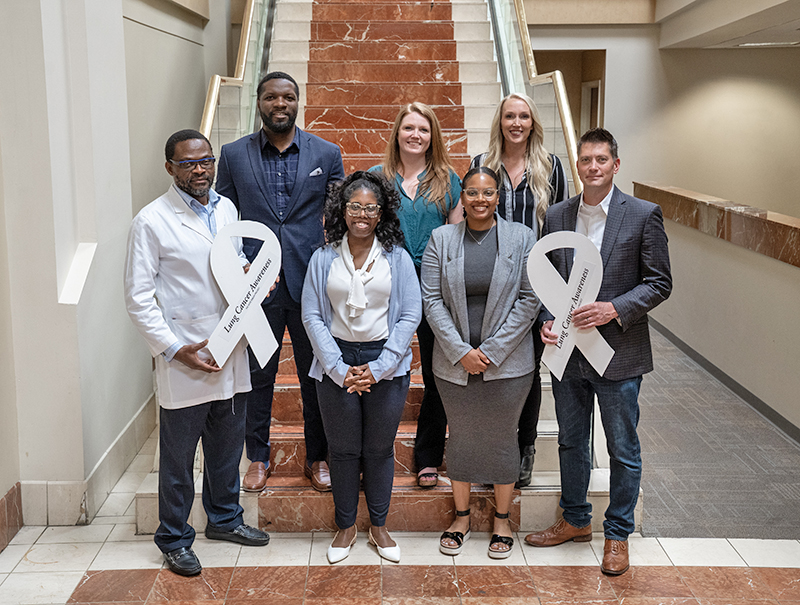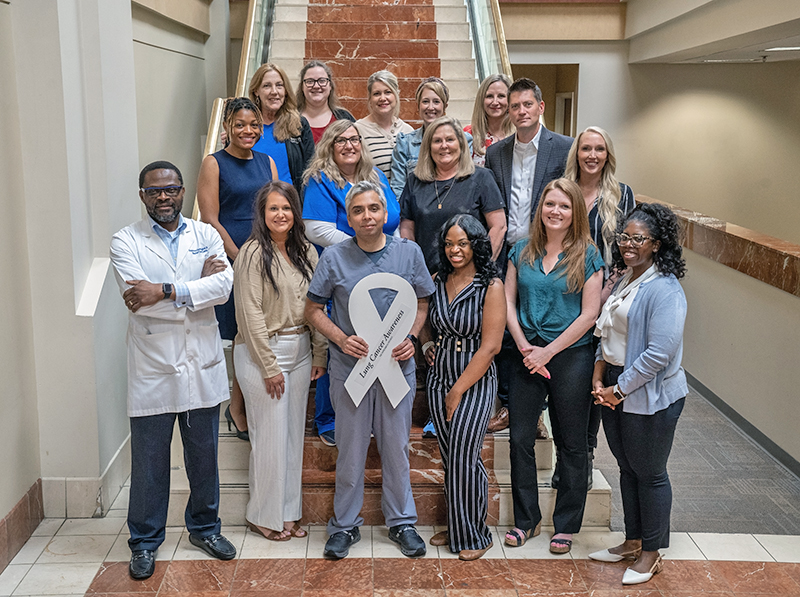
Baptist Cancer Center’s Thoracic Oncology Research Group recently published its analysis of how the Incidental Pulmonary Nodule (IPN) Program helped overcome barriers to early lung cancer detection among patients in BCC’s Multidisciplinary Thoracic Oncology Program.
The research was published in the Journal of Thoracic Oncology, June 2025, Vol. 20, No. 6, an official journal of the International Association for the Study of Lung Cancer, along with an editorial about barriers to lung cancer screening by Marie-Pierre Revel, Ph.D., with the Université Paris Cité in Paris, France.
The IPN Program focuses on ensuring proper management of lung nodules found incidentally on scans unrelated to lung cancer screening. The research found Baptist Cancer Center’s IPN Program rescued people who developed lung cancer even though they didn’t meet the age or smoking history criteria for screening, such as people who had never smoked, and those who should have been screened, but did not receive screening.
As a result of the IPN Program, survival rates for patients who developed lung cancer even when not eligible for screening went from 42% to 60% if rescued by the IPN Program and from 35% to 60% among people who should have been screened, but did not receive screening.
The research, titled “Barriers to Lung Cancer Screening in a Multi-Disciplinary Thoracic Oncology Program Cohort: Effects of an Incidental Pulmonary Nodule Program,” examined 1,904 patients with lung cancer who were treated through the Multidisciplinary Thoracic Oncology Program from 2015 to 2023.
“Expanding eligibility for lung cancer screening and improving participation rates are important for public health,” said Dr. Raymond Osarogiagbon, chief scientist for Baptist Memorial Health Care and director of the Multidisciplinary Thoracic Oncology Program and the Thoracic Oncology Research Group for Baptist Cancer Center. “Meanwhile, an IPN Program within a Multidisciplinary Thoracic Oncology Program is an effective strategy for identifying lung cancer cases that could otherwise go undetected.”
Dr. Osarogiagbon is the principal investigator of the ongoing systemwide Detecting Early Lung Cancer (DELUGE) in the Mississippi Delta project. The DELUGE project is Baptist’s innovative two-pronged approach to early lung cancer detection and is a key component of Baptist Cancer Center’s Mid-South Miracle initiative to reduce lung cancer deaths in the Mid-South by 25% by 2030.