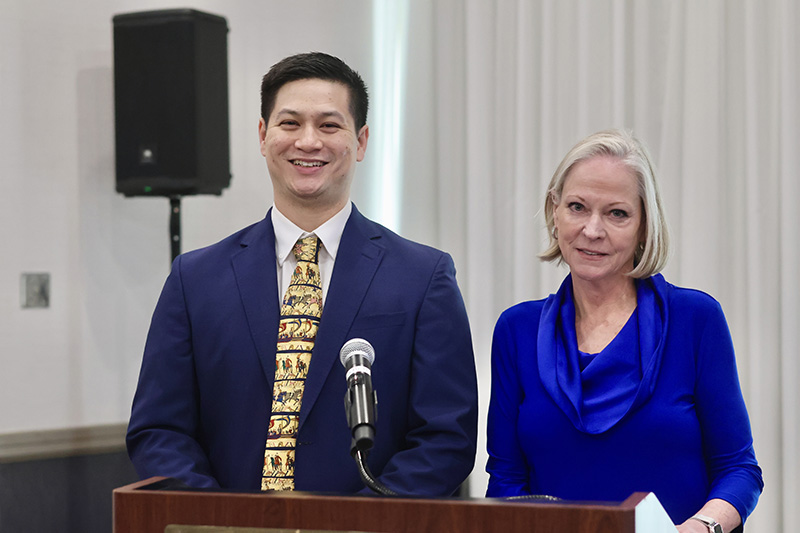
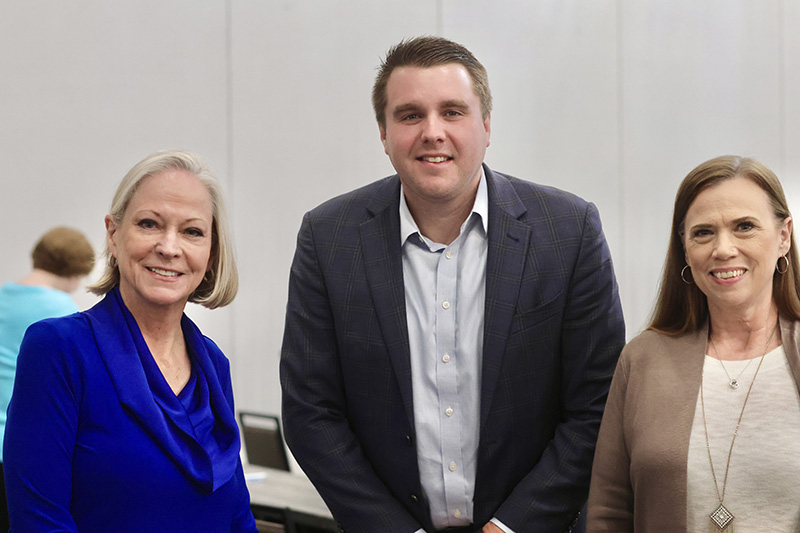
Providers from across Baptist gathered at Hilton Memphis for two days of presentations on the future of cancer care on Friday, Nov. 14 and Saturday, Nov. 15 at the 18th annual Mid-South Cancer Symposium. Symposium speakers included Dr. Lecia V. Sequist, a medical oncologist and researcher with Harvard Medical School, and Dr. Garnet L. Anderson, a biostatistician and clinical trialist with Fred Hutchinson Cancer Research Center.
The symposium titled “Synergy in Oncology: Innovating Lung, Hematologic and Breast Cancer Care” explored the advantages of a multidisciplinary approach to treating cancer. Topics included the use of AI technology in lung cancer diagnosis and treatment, updates on radiation therapy for breast cancer, multidisciplinary care for multiple myeloma, early diagnosis of cancer and genetics.
“Baptist Cancer Center is a premier cancer center that collaborates with other globally recognized cancer programs on developing innovative diagnoses and treatments, including multidisciplinary care programs, new techniques and advanced research,” said Parker Harris, administrator of Baptist Cancer Center. “Through Baptist Cancer Center’s annual Mid-South Cancer Symposium, our oncologists and researchers get to share their work and outcomes and hear from national cancer experts on new technology, medical advancements and using AI for greater diagnosis and treatment of cancer.”
Sequist discussed innovative AI image analysis that has the potential to detect lung cancer years before it’s visible on a CT scan, and Anderson explored the capability of new blood tests to accurately detect multiple types of cancer.
Sequist, the Landry Family professor of Medicine at Harvard Medical School and program director of the Cancer Early Detection and Diagnostics Clinic at Mass General Brigham Cancer Institute, leads a collaboration with Baptist Cancer Center and MIT to test an AI algorithm called Sybil that studies suggest might predict who will develop lung cancer in the future with more than 90% accuracy. The collaboration is part of a $6 million project involving five U.S. hospitals working as a consortium over three years to determine what Sybil could mean for reducing lung cancer cases with fewer CT scans.
“It’s great if a new technology can be adopted at Harvard or MIT,” said Sequist, a founding member of the consortium. “But it only helps people if it actually works in the real world where most people live.”