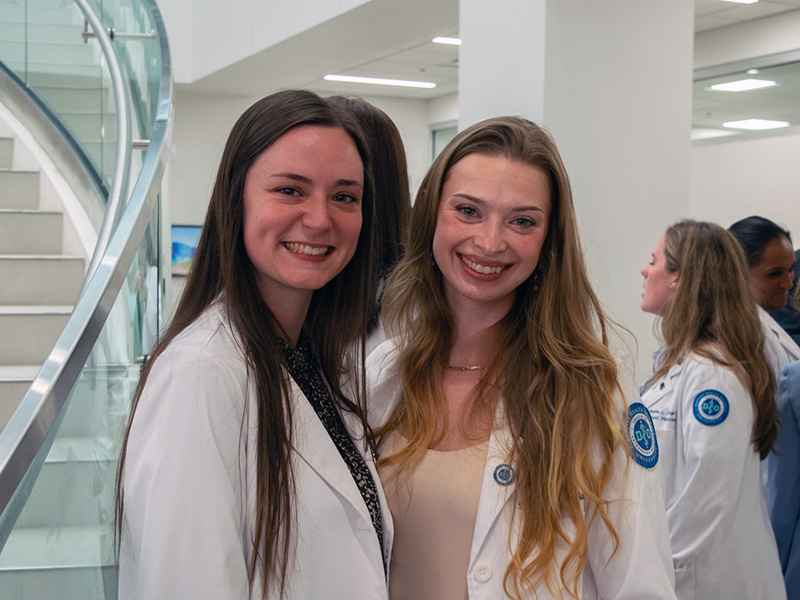
The first class of third-year Baptist Health Sciences University College of Osteopathic Medicine (BUCOM) students recently began their clinical rotations at Baptist Memorial hospitals in Arkansas, Mississippi and Tennessee. The clinical rotations for these 79 students mark a significant milestone in their medical training.
For communities in the Mid-South, their presence also means progress toward increasing access to health care professionals.
“This is an incredible milestone for the students and faculty of Baptist Health Sciences University College of Osteopathic Medicine,” said Hampton Hopkins, Ed.D., president of Baptist Health Sciences University. “All of the students that started with our inaugural class in 2024 are continuing to the next phase of their training. As they advance professionally and in their practice of medicine, they will help strengthen our communities, reduce the gaps in medical care and increase access to high-quality health care professionals across the region.”
BUCOM Students at Each Clinical Rotation Location
- Baptist Anderson Regional Medical Center: Nine students
- Baptist Memorial Hospital-Carroll County and Baptist Memorial Hospital-Union City: Five students
- Baptist Memorial Hospital-DeSoto: Nine students
- Baptist Memorial Hospital-Golden Triangle: Three students
- Baptist Memorial Hospital-Memphis: 22 students
- Baptist Memorial Hospital-North Mississippi: Five students
- Baptist Memorial Hospital-Union County: Five students
- Mississippi Baptist Medical Center: 19 students
- NEA Baptist Memorial Hospital: Two students
According to the Association of American Medical Colleges, the Health Resources and Services Administration projects a shortage of almost 70,000 primary care physicians by 2036 and an equal shortage of specialty physicians.
“I am so proud of these students and their dedication to their training and this region,” Hopkins said. “Data show many medical students often stay in the communities where they train. Our hope is that these students will choose to stay in the Mid-South and make a difference for the next generation of patients.”